Is Dark Energy Evolving? UChicago Astrophysicists Consider the
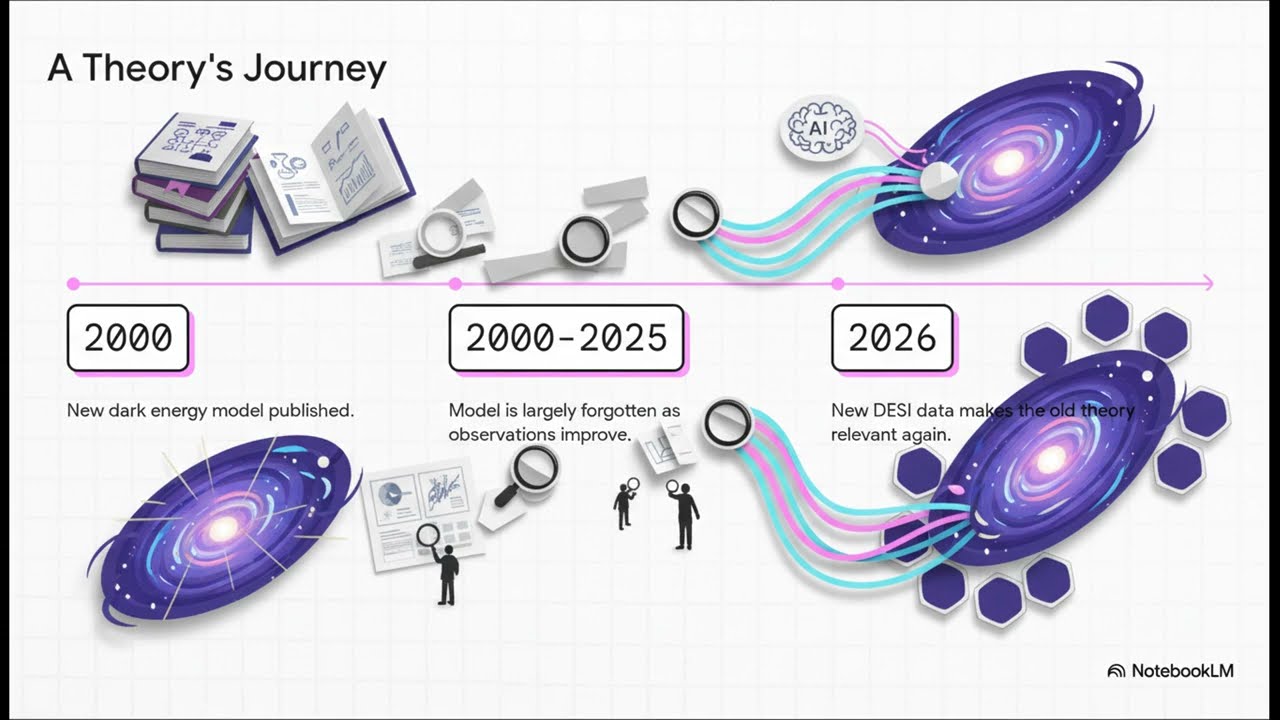
The **University of Chicago**'s **Josh Frieman** and **Anowar Shajib** have found that dynamical models of evolving dark energy can better explain the data than
Summary
The **University of Chicago**'s **Josh Frieman** and **Anowar Shajib** have found that dynamical models of evolving dark energy can better explain the data than the **cosmological constant**. This discovery could indicate that dark energy is not constant, but rather a new, dynamical phenomenon. The researchers used data from the **Dark Energy Survey** and **Dark Energy Spectroscopic Instrument** to make this finding. If confirmed, this could lead to a new understanding of the universe's expansion and the discovery of a new particle. [[dark-energy|Dark Energy]] has been a mystery since its discovery in the 1990s. The **NASA Hubble Fellowship Program** has also been involved in this research. [[nasa|NASA]] has been a key player in the study of dark energy. The **Vera Rubin Observatory Legacy Survey of Space and Time** will also play a crucial role in confirming or refuting this finding. The implications of this discovery are significant, as it could change our understanding of the universe's evolution. The researchers believe that if dark energy is evolving, it could be due to the presence of a new particle, such as an **axion**. [[axion|Axions]] are hypothetical particles that were first predicted by physicists in the 1970s. The study of dark energy is an active area of research, with many scientists working to understand its nature. [[university-of-chicago|University of Chicago]] is at the forefront of this research, with scientists like **Josh Frieman** and **Anowar Shajib** leading the charge.
Key Takeaways
- The **University of Chicago**'s **Josh Frieman** and **Anowar Shajib** have found that dynamical models of evolving dark energy can better explain the data than the **cosmological constant**
- The **Dark Energy Survey** and **Dark Energy Spectroscopic Instrument** have provided valuable insights into the nature of dark energy
- The discovery that dark energy may be evolving is not a conclusive finding and should be treated with caution
- The search for a new particle, such as an **axion**, is a challenging task that may take years to complete
- The **Vera Rubin Observatory Legacy Survey of Space and Time** will play a crucial role in confirming or refuting this finding
Balanced Perspective
The finding that dark energy may be evolving is a significant discovery that warrants further research and consideration. While the data suggests that dynamical models of evolving dark energy can better explain the observations than the **cosmological constant**, more research is needed to confirm this finding. The **Dark Energy Survey** and **Dark Energy Spectroscopic Instrument** have provided valuable insights into the nature of dark energy, but more data is needed to fully understand its role in the universe's expansion. The **Vera Rubin Observatory Legacy Survey of Space and Time** will play a crucial role in confirming or refuting this finding. [[vera-rubin-observatory|Vera Rubin Observatory]] is a key facility for the study of dark energy.
Optimistic View
The discovery that dark energy may be evolving is a groundbreaking finding that could revolutionize our understanding of the universe. If confirmed, this could lead to a new era of research and discovery, as scientists work to understand the nature of dark energy and its role in the universe's expansion. The potential discovery of a new particle, such as an **axion**, is also an exciting prospect. [[axion|Axions]] have been predicted by physicists for decades, and their discovery could have significant implications for our understanding of the universe. The **University of Chicago**'s research in this area is a testament to the institution's commitment to advancing our understanding of the universe.
Critical View
The discovery that dark energy may be evolving is not a conclusive finding and should be treated with caution. The data used to make this discovery is still limited, and more research is needed to confirm or refute this finding. The **cosmological constant** is still a widely accepted theory, and it is possible that the observations can be explained by other factors. The search for a new particle, such as an **axion**, is also a challenging task, and it may be years before we have a definitive answer. The **University of Chicago**'s research in this area is just one part of a larger effort to understand the universe, and we should be careful not to overstate the significance of this finding.
Source
Originally reported by University of Chicago News